Banana powder is a plant based powdered product which is made from fresh bananas via a process of washing, peeling, slicing, drying and pulverising. So what are the banana flour production methods? We’ll go through some of the more common methods of banana powder production below.
The basic production process for banana powder is as follows:
Selection of raw material → washing → peeling → slicing → colour preservation treatment → drying → pulverising → sieving → packaging.
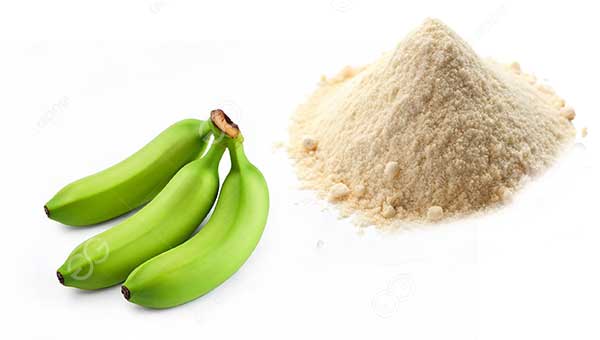
1. Selection and Washing of Raw Materials
Start with green bananas that are free from rot and any visible physical damage. The quality of the raw materials will have a direct bearing on the quality of the resulting banana flour. Put the bananas into a fruit washing machine (using water jets, air bubbles or whatever method is appropriate) to remove the surface soil, dust and other impurities. For a continuous production process an automated conveyor style washing system can be used to wash the raw materials.
2. Peeling
Once washed the bananas have to be peeled. For small and medium scale production manual peeling will be used. For large scale industrial production mechanical peeling can be used (the type of machine selected will be dictated by the size, shape and capacity of the production).
3. Slicing
Once peeled the bananas are fed into a slicer and sliced to a uniform thickness. The thickness of the slices has a bearing on the efficiency of the drying process as if they’re too thick then it’s very difficult to get the moisture out of the centre of the slice and that will result in a longer drying time.
4. Color Preservation
Banana flesh is very prone to enzymatic browning on exposure to air and hence it is generally necessary to carry out a colour preservation treatment as soon as the fruit is sliced. The type of colour preservation treatment required will depend on the positioning of the product and the manufacturer will select an appropriate food-grade method (for example an antioxidant treatment which is in line with the relevant regulations).
5. Drying of Banana Slices
Drying is a key stage in the production of banana powder. The fresh banana has a very high moisture content and must be dried to reduce this moisture to a level appropriate for subsequent milling and storage. The drying temperature, the length of time and the thickness of the layer of material will all have to be tailored to the particular banana variety and the requirements of the final product.
6. Pulverization and Sieving
Once the banana slices have dried they’re fed into a pulveriser which literally pulverises them down to a fine powder. That powder is then passed through a vibrating sieve to get rid of any larger bits and to ensure that you end up with a much more uniform particle size.
7. Packaging and Storage
The banana powder which has passed the screening is then fed into an automatic weighing and packing machine and packed into bags or other formats as required by the customer. As banana powder is very prone to absorbing moisture from the atmosphere it is advisable to use food grade packaging with excellent moisture proof properties and to store the product in a cool, dry place.
Considerations in the Banana Powder Production Process
- Adjust the processing plan based on the variety of raw material
- Prioritize color preservation and drying control
- Regulate the moisture content of the final product
- Select equipment based on the intended use of the finished product
For any enterprise looking at setting up a banana flour processing plant it is advisable to carry out some testing of the raw materials and the finished product prior to buying the equipment. This will allow you to establish the correct process parameters and equipment configuration which in turn will lead to improved production efficiency, less raw material waste and a more consistent product.