Banana chips are a common snack food made primarily from fresh bananas. The production process involves slicing, color preservation, frying, de-oiling, cooling, and packaging. The final product can have a texture that is either crispy or slightly chewy. Frying is a crucial step; it not only determines the product’s texture but also directly influences the color, oil content, crispiness, and production efficiency of the banana chips.
What is the banana chips frying temperature?
In the production of banana chips, process testing can typically begin within an oil temperature range of 150–180°C. However, this is merely a general reference range and may not be applicable to all types of banana chips products. In actual production, adjustments should be made based on factors such as the thickness of the banana chips, their moisture content, the desired texture, and the specific frying equipment being used.
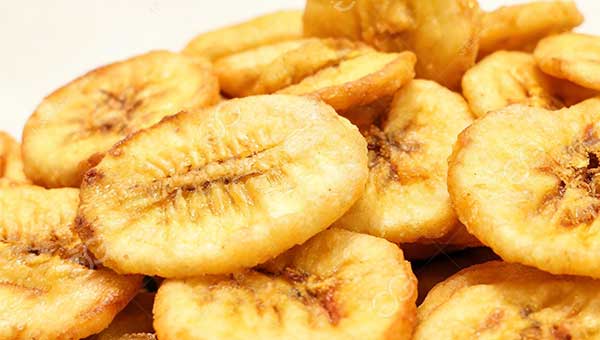
Different temperature settings yield different processing results.
150–160°C: The frying process is relatively gentle, making it suitable for products that require a longer dehydration time. However, if the temperature is too low or the frying duration is insufficient, the banana chips may retain excess moisture and lack the desired crispiness.
160–170°C: This range can serve as an initial testing point for certain types of banana chips, helping to strike a balance between dehydration rate, color, and texture. The final outcome should be verified through actual trial frying.
170–180°C: Heat transfer occurs more rapidly, which helps shorten the frying time; however, this demands stricter control over both temperature and processing duration. Banana chips may brown more quickly, and if not carefully managed, they are prone to issues such as excessively dark surface color or localized scorching.
Why is the banana chips frying temperature so important?
1. Impact on the color of banana chips
Bananas contain natural sugars and various components that are prone to chemical changes. During the frying process, as the temperature rises and moisture content decreases, the color of the banana chips gradually changes.
If the temperature is well-controlled, the finished product will achieve a uniform, golden-yellow hue. However, if the oil temperature is too high, the surface of the banana chips may darken rapidly—potentially even developing charred spots—while the moisture inside has yet to be sufficiently removed.
2. Determining Product Crispness and Texture
The crispness of banana chips is closely linked to their moisture content, structural changes, and the conditions under which they are fried.
If the oil temperature is too low, moisture is removed too slowly, often resulting in a product with a soft texture. Conversely, if the temperature is too high, the outer layer may harden or discolor rapidly, while the moisture inside remains unevenly distributed—leading to inconsistencies in texture between different batches.
3. Impact on Oil Content and Production Efficiency
During the frying process, moisture within the banana slices gradually evaporates, creating a porous structure that influences subsequent oil absorption. Factors such as oil temperature, frying duration, the initial moisture content of the raw material, and the cooling process after removal from the fryer all affect the final oil content.
What factors influence the frying temperature for banana chips?
- The ripeness and moisture content of the bananas
- The thickness of the banana slices
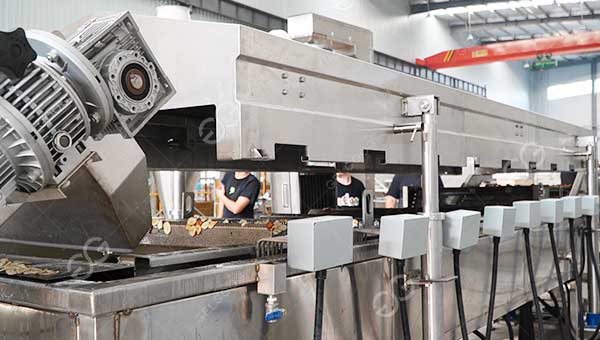
- The type of frying equipment used
- Production capacity and feed rate
Therefore, temperature settings must be aligned with production capacity. Adjustments should be made to the feed rate, frying duration, and heating power.If you are unsure how to determine the precise temperature settings, please contact us for assistance.