The finished product yield is a key concern for many clients planning to invest in banana powder processing projects; so, How much banana is required for 1kg of banana powder?
Since fresh bananas have a high water content and undergo processing steps such as peeling, slicing, drying, milling, and sifting—each of which results in a change in weight—our engineers have determined, through multiple processing trials and production data analysis, that producing 1kg of banana powder typically requires approximately 7kg of fresh bananas. However, this figure is not absolute; actual yield is influenced by factors such as the banana variety, the ripeness of the raw material, the final moisture content, and losses incurred during production.
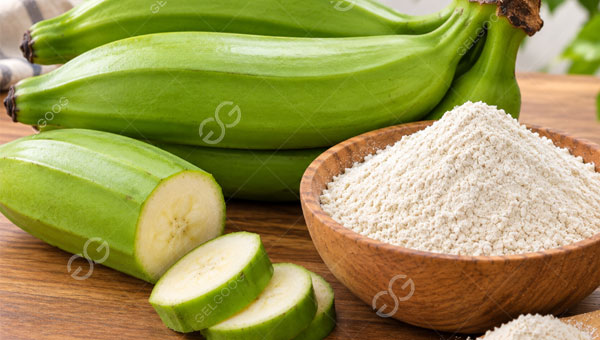
Why does it take approximately 7 kg of bananas to produce 1 kg of banana powder?
The primary difference between banana powder and fresh bananas lies in their moisture content.
Fresh bananas contain a high proportion of water, whereas banana powder is a dehydrated product. During the drying process, a significant amount of moisture is removed, resulting in a substantial reduction in the weight of the raw material. Additionally, the peels must be removed before processing; while the peels account for a portion of the fresh banana’s weight, they do not end up in the final banana powder product.
Therefore, the process from fresh bananas to banana powder can be simply understood as:
Fresh bananas → Peeling → Slicing → Drying → Milling → Sifting → Banana powder
During this process, weight loss stems primarily from two sources:
First, loss resulting from peeling.
Banana peels cannot serve as a primary ingredient for standard banana flour; therefore, the peel must be removed prior to processing. As peel thickness varies across banana varieties, the actual flesh yield after peeling differs accordingly.
Second, moisture loss caused by drying.
This is the stage where the most significant change in weight occurs during the entire processing operation. Fresh bananas contain a high level of moisture, whereas banana flour requires a relatively low and stable moisture content. As processes such as hot-air drying proceed, moisture evaporates from the banana slices, leading to a substantial reduction in the weight of the raw material.
What factors affect the yield of banana powder?
1. Banana variety
Different banana varieties may differ in terms of peel-to-flesh ratio, pulp structure, and moisture content.
If 1,000 kg of bananas are purchased, the weight of usable pulp obtained after processing can vary depending on the variety; consequently, the final yield of banana powder will also vary.
2. Banana Ripeness
Bananas at different stages of ripeness differ in terms of moisture, starch, and sugar content; these variations subsequently affect drying efficiency and the properties of the final powder.
3. Moisture content of the finished product
This is a key factor influencing the final weight.
Even when the same raw materials and processing equipment are used for two batches of bananas, differences in the target moisture content set for the final banana powder can result in variations in the final powder weight.
Therefore, establishing product standards is essential when calculating the yield of banana powder.
4. Processing losses
In addition to losses naturally incurred during peeling and dehydration, minor losses may also occur during stages such as equipment operation, material handling, slicing, grinding, and screening.
How is banana powder production equipment configured?
A complete banana powder production line is typically configured based on raw materials and production capacity; common equipment includes:
Banana washing equipment → Peeling equipment → Slicer → Dryer → Pulverizer → Sifting equipment → Packaging equipment
The quantity, model, and level of automation of the equipment vary depending on the scale of the banana powder plant.Please contact us to obtain a detailed banana powder processing solution.