In the snack food market, plantain chips have gradually gained immense popularity due to their sweet, crispy texture and ease of storage. Particularly in the Southeast Asian and South American markets, plantain chips are not only sold as standalone snacks but are also incorporated into products such as breakfast cereals, mixed nuts, and baked goods.
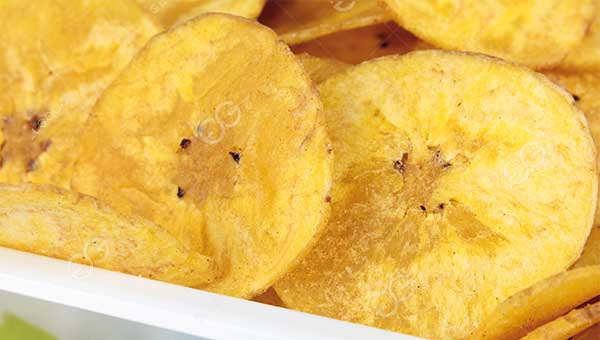
So, How to make plantain chips in factories?
In modern food processing plants, the production of plantain chips follows a complete and highly efficient workflow. From raw material preparation to final packaging, every stage is subject to rigorous control to ensure that the plantain chips possess a uniform color, a crispy texture, a moderate oil content, and a good shelf life.
- Raw Material Selection and Pre-treatment
Upon entering the facility, raw materials first undergo a sorting process. Personnel or automated sorting equipment remove damaged, rotten, or undersized plantains to ensure the consistent quality of the final product. Subsequently, the plantains pass through a conveyor system into the washing stage to remove surface dirt and impurities.
- Peeling
The washed plantains must undergo a peeling process. While some factories utilize manual assistance for peeling, large-scale processing plants increasingly employ mechanized peeling equipment to enhance efficiency and reduce labor costs.
- plantain Slicing
Slicing is one of the critical steps that determine the quality of plantain chips. The thickness of the plantain slices directly dictates the subsequent frying results and the final texture.
Depending on specific product requirements, plantain slices can be cut into round discs or long strips. Generally speaking, the thinner the slices, the easier it is to achieve a crispy texture.
- Color Preservation Treatment
plantain pulp is prone to oxidative discoloration when exposed to air; therefore, sliced plantains typically require a color preservation treatment. By utilizing food-grade color-preserving solutions to mitigate oxidation, the plantain slices retain their natural golden-yellow hue throughout subsequent processing stages. Some production lines also incorporate a rinsing step to further remove excess starch and surface sugars, thereby enhancing the results of the frying process.
- Frying Process
Frying is a core process in the production of plantain chips, as well as a critical step in determining the product’s texture. Frying temperature, duration, and the oil circulation system all directly impact product quality. Typically, plantain chips undergo continuous frying within a stable temperature environment to ensure that every chip is heated uniformly. During the frying process, the moisture within the plantains evaporates rapidly, creating a crispy structure and gradually developing a golden-yellow appearance.
The above outlines the primary production process for plantain chips; however, as production requirements vary across different facilities, actual processing procedures may differ. Furthermore, in response to ever-increasing market demands regarding food hygiene, production efficiency, and product consistency, modern factories typically utilize automated plantain chips equipment for the production of plantain chips.