Fried banana chips are made from fresh bananas through slicing, blanching, frying, and de-oiling, etc. The chips have a crispy texture and are loved by many consumers. Compared to fresh bananas, fried banana chips are not only easier to preserve but also more convenient to transport. So, how to fry banana chips?
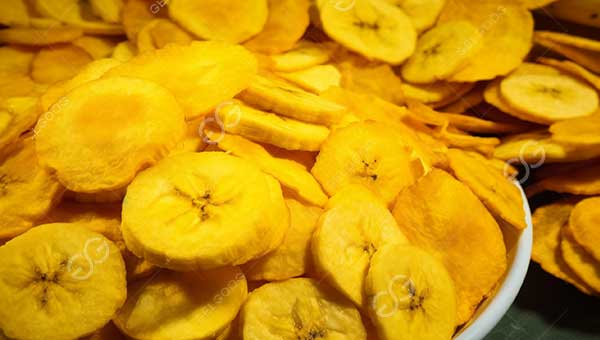
Before frying, banana chips undergo a series of processing steps to ensure consistent product quality.
1. Raw material selection and pre-processing
After being peeled manually, the bananas are sliced into 2–4 mm thin slices using a banana slicer. Uniform slicing is crucial for ensuring consistent heating during the subsequent frying process.
2. Frying
The banana chips are then transferred via a conveyor system to a banana chips fryer machine. The oil temperature is generally controlled between 160–180℃, and the frying time is adjusted according to the thickness and moisture content of the banana slices. A variable frequency speed control system allows for precise control of the banana slices’ residence time in the oil, thus achieving stable and repeatable frying results. During the frying process, the moisture inside the banana slices evaporates rapidly, forming a porous structure, which is key to the crispy texture of the final banana chips.
3. Oil Removal and Cooling
After frying, the banana chips enter an oil removal machine to remove excess surface oil, stabilizing their structure and preparing them for subsequent seasoning and packaging.
How can you fry banana chips to ensure they are crispy?
To produce crispy and visually appealing fried banana chips for export, meticulous control of the frying process is crucial, encompassing the following aspects:
1. Stable oil temperature control
Maintaining a stable oil temperature is crucial. Too low an oil temperature will result in the banana chips absorbing too much oil, making them greasy and not crispy; too high an oil temperature will cause the surface of the banana chips to burn quickly, while the internal moisture hasn’t fully evaporated, affecting both taste and appearance.
2. Consistent slice thickness
Unevenly sliced banana chips will directly lead to inconsistent frying results: thin slices will burn easily, while thick slices will not be crispy.
3. Precise and controllable frying time
Consistent frying time is also very important. If the frying time is too short, more moisture will remain inside the banana chips, causing them to soften after cooling. Too long a frying time will affect the flavor and increase oil consumption. With a variable-frequency speed control conveyor system, the frying time can be flexibly adjusted according to actual conditions.
4. Edible oil quality management
Edible oil, when repeatedly used at high temperatures, is prone to oxidation, affecting the flavor and safety of the banana chips. The factory should regularly filter out oil residue and replenish or replace the oil promptly to ensure stable frying quality.
With the growing consumer demand for healthy snack foods, banana chips frying is no longer the traditional process it once was; it is gradually transforming towards a more intelligent and health-conscious approach.